A herbicide with potentially harmful effects on the environment, wildlife and humans is being used on Calton Hill, despite a longstanding Council ban.
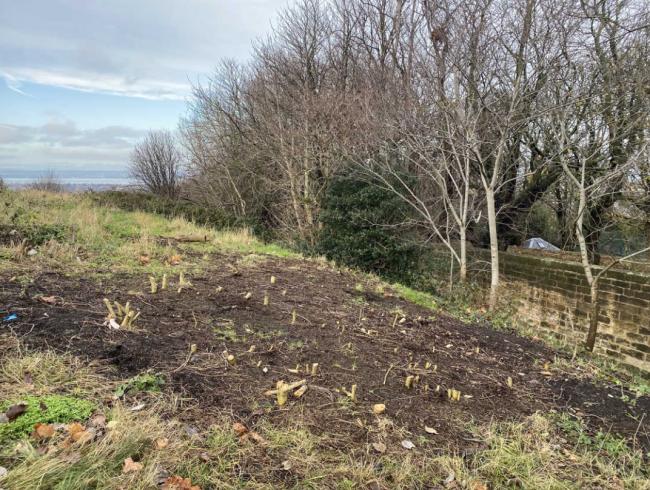
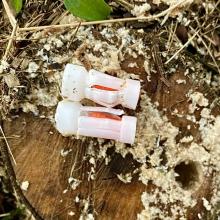
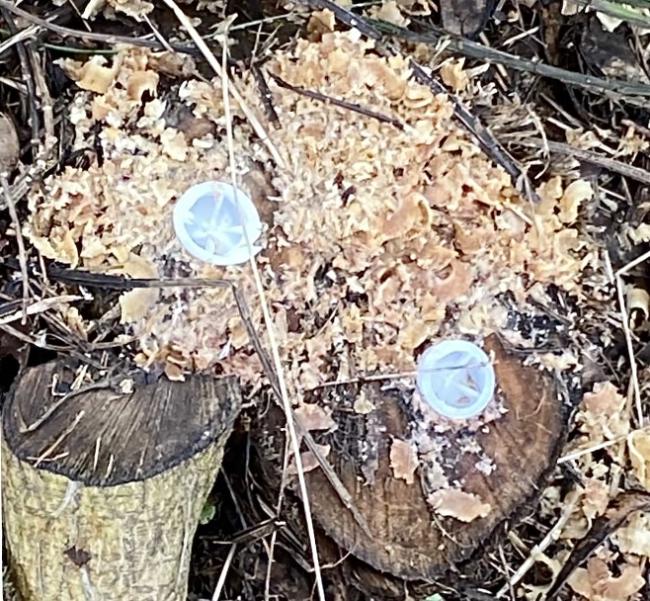
On 25 November, local resident Simon Holledge found at least 120 distinctive white and orange plugs of a product called Ecoplug Max Tree Stump Killer inserted into around 100 small native trees and shrubs felled on Calton Hill.
Holledge is an author, conservationist and former chair of the Calton Hill Conservation Trust. He says the work appears to have been carried out recently, perhaps starting in October 2026.
When hammered in, the plastic plugs he’s identified split and release herbicide to prevent regrowth. According to the manufacturer, each plug contains 204 mg of glyphosate.
Banned substance
Glyphosate was banned in all Council greenspaces from April 2024, except for special use on invasive species such as Japanese knotweed, which can’t be effectively treated in other ways.
A report to the Transport & Environment Committee in September 2023 noted:
3.5 Although there is some conflicting evidence relating to the health impact when using glyphosate-based herbicide, there is substantial evidence related to the impact on the environment and wildlife. It has been found to have detrimental effects on biodiversity and ecosystems. It can contaminate water bodies, leading to the disruption of aquatic ecosystems and harming aquatic organisms. Moreover, glyphosate can negatively impact pollinators, such as bees, which are crucial for maintaining biodiversity and food production.
Most of us have glyphosate traces in our bodies. The short-term effects on humans of exposure are clearly documented. The possible longer-term hazards to human health are the subject of scientific debate.
Where it has been used
The substance affects invertebrates directly (and obviously through loss of habitat) and is carried up the food chain to birds and animals. Dogs and other mammals can also have direct contact. It is now well-established that glyphosate should only be used in special cases.
In this latest appearance, though, the substance has been used primarily on Scotch broom, a native species that is neither invasive nor particularly fire-prone like gorse.
The two main areas involved are on the east side of Calton Hill, (1) near the Regent Gardens stone steps and (2) the top of Calton Hill Drive and up to the Parliament Cairn.
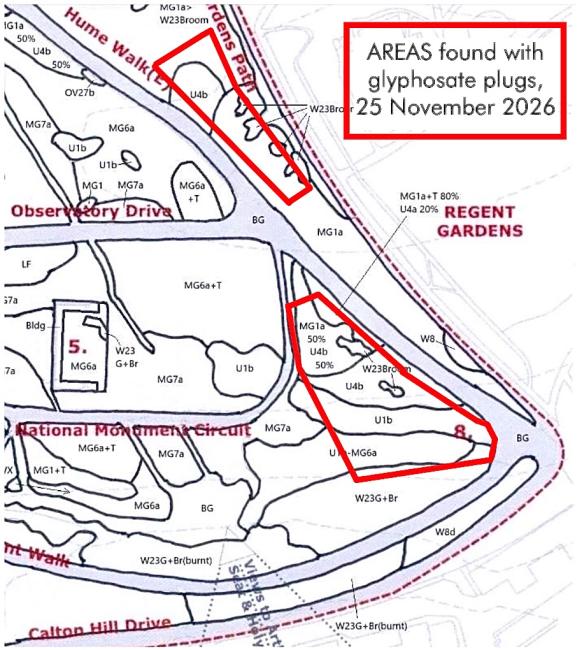
On 19 December 2025, the same type of glyphosate plug was also found near Greenside Church Path, in the western area of Calton Hill. At that time, Council officers assured locals the plugs had been put there several years earlier and that use of the substance in Edinburgh’s parks had stopped.
Who, why, how?
So who has put the herbicide plugs in the trees and shrubs this time?
Was it a unit of the City of Edinburgh Council Parks Department? Was it somehow connected with Calton Hill Conservation Trust volunteers who, aided by Council Parks staff, cleared an area of shrubs near the Parliament Cairn on 13 November?
Did those responsible obtain the necessary consent from NatureScot to do the work, as required by the Nature Conservation (Scotland) Act 2004?
Holledge has addressed his concerns to elected members and officials, and has made a Freedom of Information request to City of Edinburgh Council regarding continued use of glyphosate in the capital. Spurtle has separately approached the Council and Calton Hill Conservation Trust for comment.
Got a view? Tell us at spurtle@hotmail.co.uk