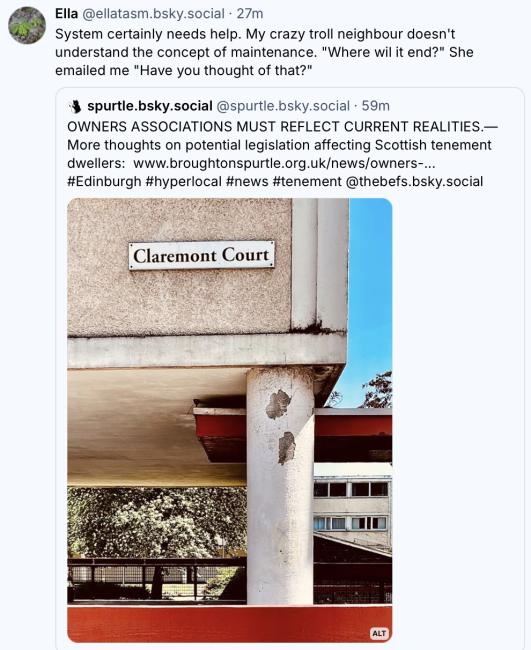
Last week, we published an article summarising responses to the Scottish Law Commission's proposal for compulsory owners associations in Scotland's tenements. You can read it here.
Below, local resident Dennis O'Keeffe gives a professional appraisal of contemporary tenure realities and why absentee ownership, private-rented-sector growth and short-term letting churn must shape the design of any new arrangements.
The renewed focus on the future of Edinburgh’s tenements is timely and necessary. Scotland’s tenement housing stock represents a substantial proportion of national and urban housing supply, and its condition now intersects directly with the cost of living crisis, energy transition objectives, and public confidence in local governance. The Scottish Law Commission proposals for compulsory owners associations are therefore not merely technical reform. They represent a structural intervention in how shared urban property is governed.
To succeed, however, reform must be grounded in present-day realities and supported by institutional capability. Law alone will not deliver resilient outcomes.
Contemporary tenure realities
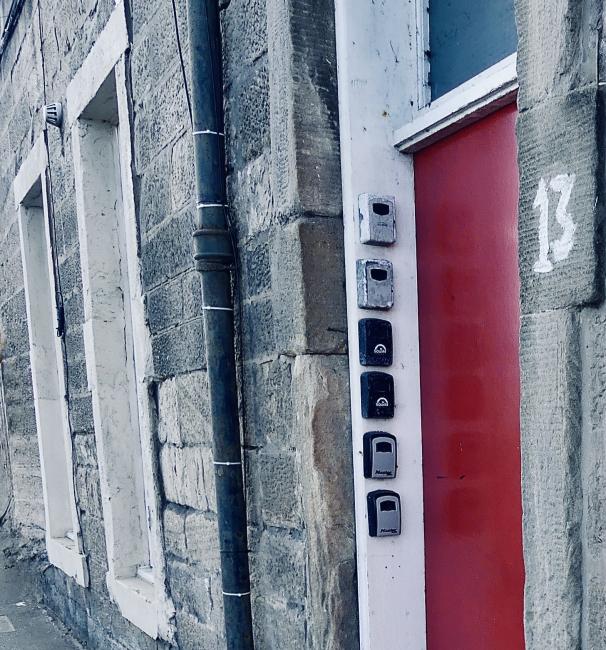
Over the past two decades, the ownership profile within Edinburgh tenements has changed significantly. In many stairs there is now a higher proportion of non-resident owners, a larger private-rented-sector presence, and in some locations a concentration of short-term lettings. These patterns alter how buildings are experienced and how decisions are made.
Resident owners often view the tenement as a long-term shared home and place value on gradual stewardship. Absentee owners, including landlords and short-term letting investors, typically relate to the building as an income-generating asset. This distinction does not imply poor intent, but it does affect availability, responsiveness, and willingness to engage in routine collective tasks such as rear garden maintenance, stair upkeep, or early-stage building surveys as the proper basis for proactive and preventive maintenance.
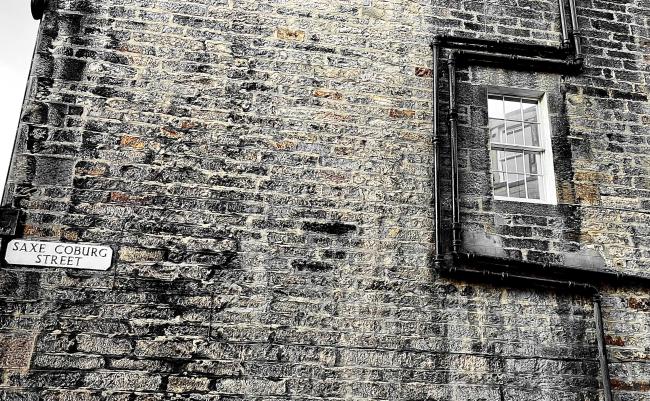
In traditional tenement forms comprising main door flats at ground level and a common stair serving multiple upper flats, these differences are amplified. Responsibility for shared elements such as roofs, masonry, rainwater goods, and rear gardens often sits disproportionately with stair owners. When cooperation weakens, buildings drift into reactive maintenance. Repairs are then undertaken under time pressure, with limited scope definition and reduced competitive tension in procurement. Costs increase, disputes arise, and payment enforcement becomes difficult even where rental income and capital values remain strong.
This dynamic is well understood internationally. The key lesson is that modern tenement governance must assume absentee ownership and variable engagement as the norm rather than the exception. Systems must be designed accordingly.
Preventive maintenance and cost control
One of the clearest consequences of weak governance is the loss of preventive maintenance. Without routine condition surveys and forward planning, common repairs occur only when failure becomes unavoidable. Emergency roof repairs and masonry works are typically more expensive than planned interventions. They are harder to specify accurately, attract fewer competitive bids, and create fertile ground for disagreement about necessity and cost.
Democratic jurisdictions in other countries that have stabilised multi-owner housing systems over time have done so by embedding routine inspection cycles and forward maintenance planning. These mechanisms shift expenditure from crisis response to managed stewardship. They also protect responsible owners from repeatedly carrying administrative and financial risk on behalf of others.
Governance requires capability as well as obligation
The current proposals would create compulsory owners associations across Scotland. This implicitly creates a new governance role within every tenement, namely the association manager. Whether this role is filled by a resident owner, an appointed professional, or a hybrid arrangement, it carries responsibilities for finance, procurement, compliance, and communication.
Without structured training and professional support, this role risks becoming another point of tension and mistrust. Edinburgh’s experience with the former Property Conservation Service shows clearly that statutory power without transparency, competence, and oversight can rapidly erode public confidence.
There is therefore a strong case for system stewardship by local authorities, not through direct control but through enablement and support. In Edinburgh’s case, the City of Edinburgh Council already receives income associated with property regulation and development. A proportion of this could support a dedicated tenement capability function.
Such a function could focus on several areas.
- Registration and baseline competence. Managers of owners associations should be registered and able to demonstrate a basic understanding of building maintenance planning, financial transparency, procurement principles, and conflict-of-interest management, supported by the proposed dedicated tenement capability function.
- Access to professional guidance. No individual manager can hold deep expertise across conservation, structural repair, energy efficiency, and procurement law. What is required is access to standardised guidance, templates, and clear escalation routes. The dedicated tenement capability function could provide these on websites and include them as part of the system of stewardship support proposed.
- Continuing professional development. Standards in fire safety, energy conservation, and building performance are evolving. Ongoing learning should be normalised and supported.
- Visible public-interest assurance. This does not mean day-to-day intervention. It means providing confidence that systems exist to support good practice and to intervene early when problems emerge.
Professional institutions and academic collaboration
Scotland is well placed to deliver this collaboratively. Professional bodies such as the Royal Incorporation of Architects in Scotland, the Royal Institution of Chartered Surveyors, and the Chartered Institute of Building bring long-standing expertise in building performance, procurement integrity, and professional ethics.
Other relevant institutions include the Institution of Structural Engineers, the Chartered Institution of Building Services Engineers, and the Energy Institute, particularly as tenement maintenance becomes increasingly linked to energy efficiency and low-carbon transition.
Universities and further education colleges also have a critical role. For example, and not limited to them, the University of Edinburgh and Edinburgh Napier University both have strong capabilities in building conservation, construction management, and sustainability.
Heriot Watt University has internationally recognised expertise in the built environment and energy systems. The University of Strathclyde and Glasgow Caledonian University bring deep experience in retrofit, district heating, and urban energy infrastructure.
These institutions already collaborate with public bodies and industry and could readily support research, training modules, and pilot programmes focused on tenement management.
Such collaboration could also support alignment with wider initiatives, including area-based retrofit schemes and district-heating networks, ensuring that tenement governance reform contributes positively to Scotland’s net zero ambitions rather than operating in isolation. Let's get some pilot schemes up and running, ensure their success and use them to encourage wider adoptation, lessons learnt and ongoing evolution.
International experience
Internationally, the most successful systems treat collective property management as a professional and civic activity rather than a purely private matter.
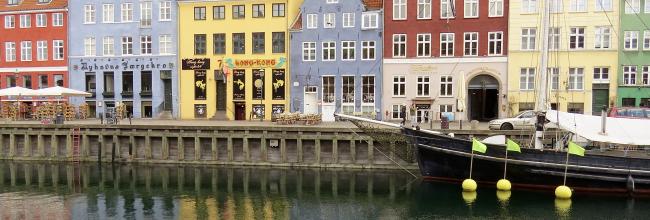
In Scandinavian countries such as Sweden and Denmark, cooperative housing and apartment associations are supported by strong municipal guidance, professional standards, and academic research.
German condominium and cooperative-housing models benefit from certification regimes and close links between technical universities, municipal energy agencies, and housing organisations. In each case, law is supported by institutional capability.
The common thread is recognition that shared buildings require shared competence as well as shared responsibility.
Getting it right first time
Compulsory owners associations are not a radical concept. They are the norm in many democratic jurisdictions. The challenge for Scotland is to implement them in a way that reflects modern tenure patterns, protects ordinary owners, and restores confidence after earlier statutory repair failures.
This consultative period offers an opportunity to design a system that combines clear legal duties with professional support, academic insight, and civic collaboration.
Done well, reform can move tenement maintenance from crisis response to planned stewardship. It can reduce costs over time, support energy transition, and strengthen confidence in collective urban living.
Edinburgh’s tenements are not simply private assets. They are part of the city’s civic infrastructure. Their future deserves careful design, institutional support, and collaborative thinking from the outset.
Eur Ing Dennis O’Keeffe (BS(Hons) MSc MBA PGDipl CEng MICE FRICS FCIOB FICE C.Eng) is a Chartered Engineer, Chartered Surveyor, Chartered Builder and Edinburgh resident tenement owner. He is also Director of Ó Cuív and Company.
--------