Mike Worobec answers his critic
Michael Upton’s response (8 June) to my article (29 May) is revealing, not because it successfully dismantles the argument but because it repeatedly avoids engaging with it.
Instead of addressing the central question I posed, Upton retreats into legal technicalities, hypothetical absurdities and a rigid defence of the status quo.
My article was never an attack on property rights. Nor was it a demand to throw open every communal garden tomorrow morning. It was an invitation to consider whether some of Edinburgh’s most significant green spaces could better serve both their owners and the wider public while respecting heritage, biodiversity and ownership.
That distinction is repeatedly ignored.
Exaggerated claims
Instead, my critic constructs a series of exaggerated scenarios.
Apparently, questioning the purpose of New Town communal gardens inevitably means demanding public access to private houses, spare bedrooms or every private garden in Scotland. This is not reasoned debate; it is the classic slippery slope fallacy.
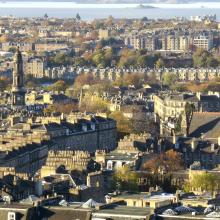
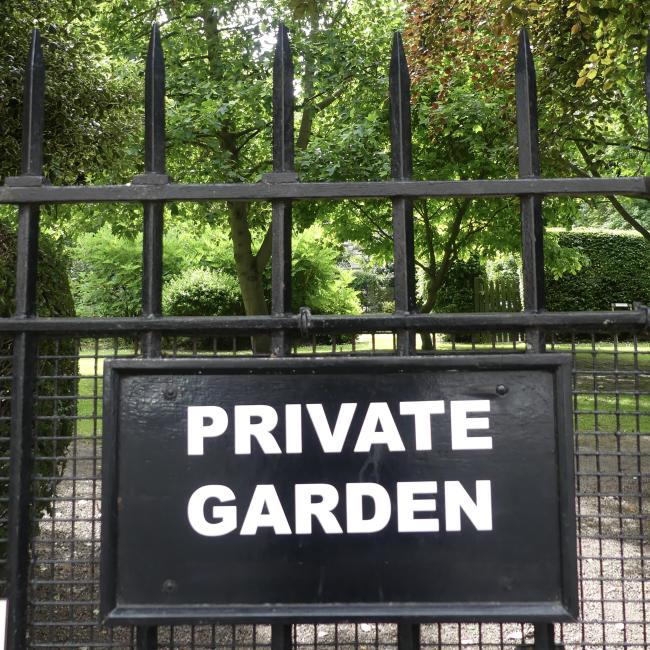
Communal gardens are not family homes. They are collectively owned landscapes which define the character of one of the world’s great planned cities and contribute enormously to Edinburgh’s internationally recognised heritage. To discuss their future is not to abolish private property.
Legal niceties
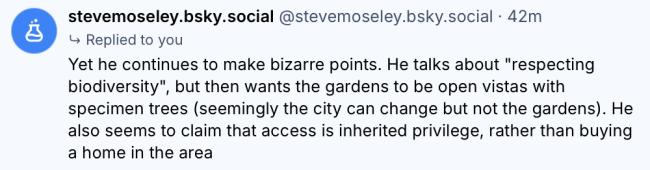
Much is made of the Land Reform (Scotland) Act and the European Convention on Human Rights, as though merely asking whether present arrangements best serve 21st-century Edinburgh somehow threatens fundamental freedoms.
Democracies constantly debate legislation. Laws evolve because society evolves. Discussing new approaches is neither revolutionary nor unlawful; it is the very essence of democratic civic life.
Upton’s repeated appeal to legality also sidesteps the real issue. The question is not simply what the law currently permits but whether today’s arrangements best reflect modern values of inclusion, community and responsible stewardship.
Growth and effective management
I am also accused of failing to appreciate that ‘trees grow’.
Of course they do.
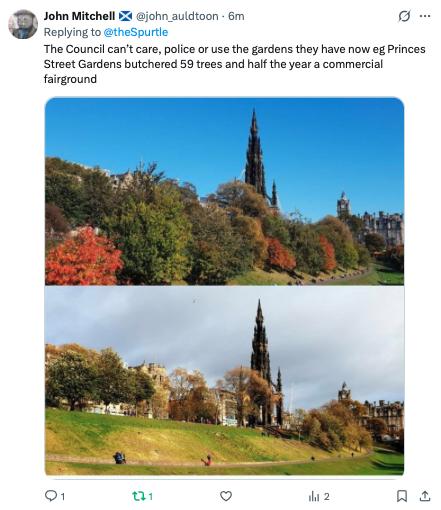
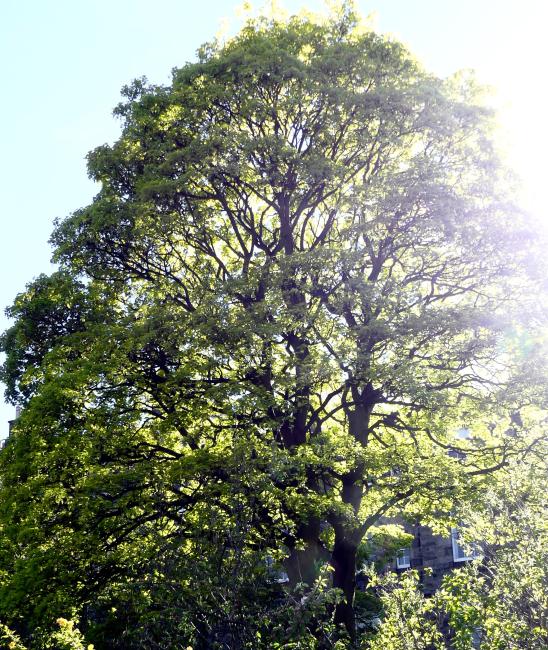
But historic designed landscapes require management, not abandonment. The New Town gardens were never intended to become unmanaged woodland. They were carefully designed compositions of openness, vistas, specimen trees and planted landscapes.
Left entirely to natural succession, every historic landscape eventually loses the qualities that made it significant in the first place. Good stewardship is not about preventing nature; it is about balancing heritage, ecology, safety and public benefit.
I also note Upton’s suggestion that less human use automatically means better biodiversity. Ecology is rather more complex than that. Rich ecosystems are often created through thoughtful management rather than neglect. Meadows, woodland edges, open glades, wetlands and carefully managed planting all support different species. Allowing every landscape simply to become denser and darker is not synonymous with ecological excellence. Conservation is active stewardship, not passive abandonment.
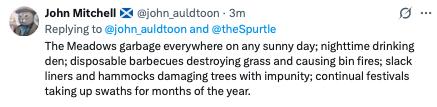
Likewise, pointing out that committees and gardeners already work hard does not answer my criticism. I have never questioned their dedication. I question whether current management priorities are producing the best outcome.
One can admire the commitment of volunteers while still believing that different management could restore openness, biodiversity and visual beauty.

Circuitous argument
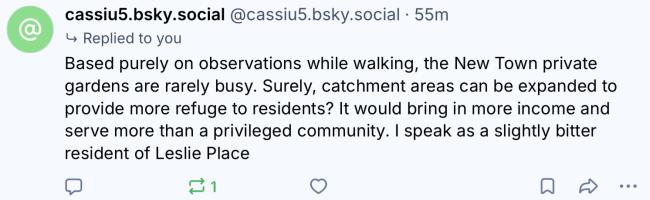
In another curious argument, Upton suggests that because people can simply walk around the gardens, there is no issue worth discussing.
Again, this misses the point entirely.
Cities constantly reconsider how public space functions. Edinburgh has transformed streets into pedestrian areas, reclaimed industrial land for parks and opened previously inaccessible spaces throughout its history.
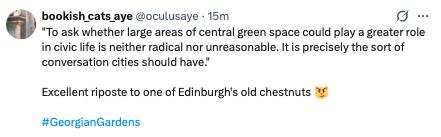
To ask whether large areas of central green space could play a greater role in civic life is neither radical nor unreasonable. It is precisely the sort of conversation cities should have.
Counting the cost
Upton’s financial objection is similarly unconvincing.
Every improvement to civic life costs money. Parks, museums, libraries, cycle paths, public art and conservation projects all require investment. We do not dismiss worthwhile ideas simply because funding must be found. Heritage trusts, grants, charitable funding, partnerships and memberships already sustain countless historic landscapes throughout Britain. Practical challenges deserve practical solutions, not dismissal.
A debate about values
Perhaps the most disappointing aspect of Upton’s response is his underlying philosophy.
Again and again, his emphasis falls not on what benefits Edinburgh collectively but on preserving exclusive arrangements simply because they already exist. There is remarkably little recognition that cities are shared places, that landscapes contribute to collective wellbeing, or that the common good is itself something worth defending.
This is ultimately a debate about values. Do we believe remarkable landscapes should evolve to meet the needs of contemporary society while respecting history? Or do we believe that inherited privilege should simply continue unquestioned?
Upton does not truly answer these questions. Instead, he caricatures my position into something I never argued.
A shared city
What disappoints me most is the tone of Upton’s response. There is little sense that Edinburgh belongs to all who live here, or that we have a shared responsibility to think creatively about its future.
He shows no curiosity about whether these extraordinary spaces might enrich the lives of more people while respecting those who care for them. Instead, there is an instinctive defence of exclusion, dressed up as practicality.
That, to me, is the real issue.
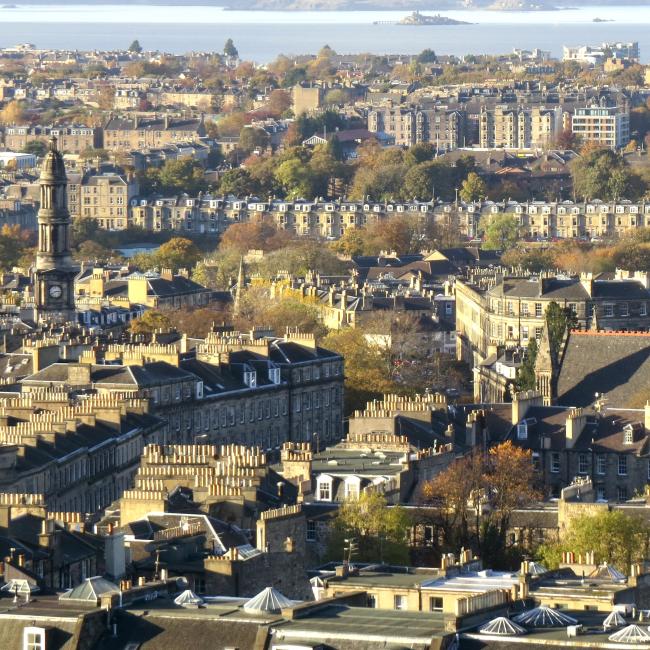
The New Town was conceived of as an expression of civic ambition, enlightened planning and confidence in the future. Those values should inspire us still.
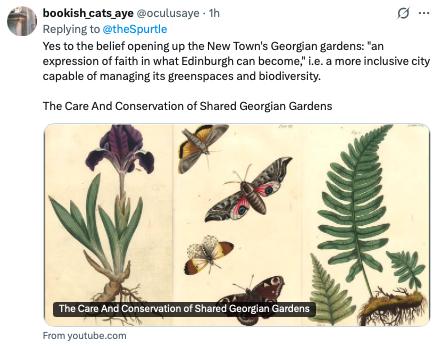
Asking how these remarkable landscapes might better balance heritage, biodiversity, community and public benefit is not an attack on Edinburgh. It is an expression of faith in what Edinburgh can become.
We should not fear that conversation. We should welcome it.
[If you found this article interesting, see also Worobec's recent response to David Jackson Young's letter at the foot of the article here.]
Got a view? Tell us at spurtle@hotmail.co.uk
*****