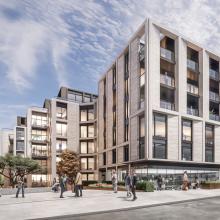
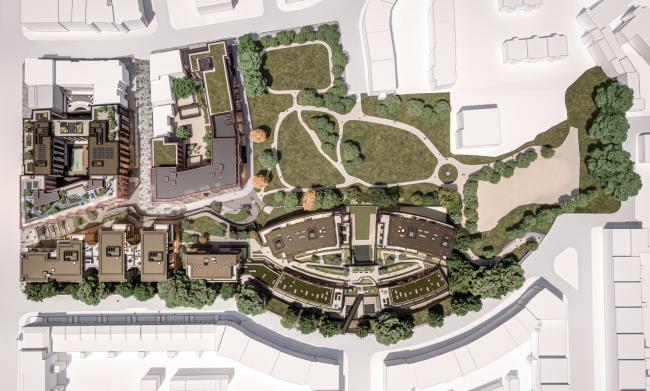
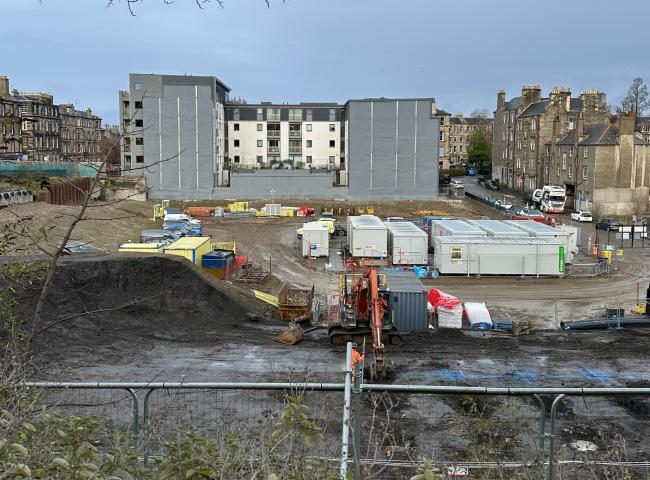
Councillors on the Development Management Sub-Cmte today voted 7 votes to 4 to refuse planning consent for revised plans about parts of overall proposals for the New Town Quarter between Dundas Street and King George V Park.
As reported here last week, officials had earlier recommended approval of the plans for a mixed-use development including 315 residential units, small-scale ground-floor commercial space, and purpose-built student accommodation (PBSA) for 591 people.
Some 447 individuals and organisations had submitted objections to the proposals.
Below, we summarise what was discussed.
Senior Planning Officer
A Senior Planning Officer (SPO) began by summarising the development site and its recent history, surrounding properties and planning context.
He said all elements of the development were, taken in the round, acceptable in principle.
Heritage items concerning views, architectural rhythm and nearby listed buildings had, he said, been resolved successfully. Edinburgh World Heritage and Historic Environment Scotland were satisfied.
Design elements – e.g. height, active frontages, through-routes, amenity – were acceptable. The general scale and massing are much the same as those in an application for the site (20/03034/FUL) previously consented in September 2021.
Two trees would be removed and some canopy coverage would be reduced. However, the final total of 102 trees in Fettes Row, Royal Crescent and King George V Park would broadly match the previously consented application.
Cllr McNeese-Mechan (Ward 12) asked about student concentration levels in the area. SPO said the Council no longer assembles these figures. He estimated student concentration to be around 20% of the local population.
Cllr Lang asked if any part of the application infringed or came close to infringing policy guideline HOU 5. SPO said public transport was OK but daylighting in student flats was occasionally too low and overshadowing of the park occasionally too high. The amount of housing matched student housing in terms of floorspace and was acceptable.
Cllr Mowat (Ward 11) asked about overshadowing of the park during busy periods. SPO said no additional information about this had been gathered. Daylight levels matched previously consented levels.
Cllr Osler (Ward 5) asked about roof-top amenity for students. SPO confirmed that such a space existed under the previously consented application.
Cllr Mowat asked how the proposal's population density compared to the surrounding area. SPO said 20,000 residents lived nearby at the time of the 2021 Census. Cllr Lang asked whether the development's density was compliant to regulations. SPO said this was an inexact science, but the amount of building and people broadly matched the previously consented application.
Ward councillors' presentations
Cllr Claire Miller (Ward 5) spoke on behalf of Fettes Row and Royal Crescent residents. She raised a 10% shortfall in required housing which also resulted in 14 fewer affordable homes. She said this was unacceptable during an acknowledged housing crisis for the city. She 'gently asserted' that PBSA would segregate rather than integrate students in the community.
She said residents were concerned also about the vulnerability of trees at the boundary, and asked for measures to protect them. Cllr Parker asked her which trees needed protection and how. Cllr Miller replied: those along Fettes Row and Royal Crescent. She wanted tree-preservation orders.
Cllr Nicolson (Ward 5) said Eyre Place residents ovewhelmingly opposed the PBSA, which represented a major departure from the earlier consented scheme. She said sufficient beds existed elsewhere for Edinburgh students. More general housing should be prioritised. Cllr Lang asked her which planning policy regulation she thought should be cited in opposing the scheme. Cllr Nicolson replied: HOU 5, referring to amenity of student accommodation. Cllr Lang asked her precisely what aspect of HOU 5 she referred to. She said she was outside her comfort zone and did not have enough knowledge to provide timely detail.
Deputations
Eyre Place & Canonmills Residents Association said locals were strongly opposed to the latest scheme, particularly the sheer number of residents, which would increase from 671 to 1,283 beds. This would overload local services, not least health-care infrastructure.
The tranquility and character of King George V Park would be erased under the proposal, resulting in overcrowding and destruction.
Monolithic housing would dominate mixed uses, including commercial ones.
Community would be eroded by transient residents and holiday-time visitors.
There was near unanimous opposition to plans favouring financial gain over local needs and the City Plan.
Rodney Street Residents Group said the previous scheme was more balanced and appropriate than the latest one.
Numerous deviations from City Plan 2030 were unacceptable.
The proposed PBSA departed from previously consented plans and infringed many planning policies, including those in respect to scale, community wellbeing, and overshadowing of King George V Park.
Poor amenity for students (over-density, cramped space, expense) were unacceptable. Broader housing arrangements would be preferable and better match City Plan 2030.
Daylight provision was inadequate in some parts of the new housing.
Fettes Row & Royal Cresent Residents Association spoke about 10 years of uncertainty and miscommunication. It wanted high-quality development, which this scheme failed to deliver.
The domination of PBSA over stable housing and a huge increase in the number of residents would overstrain local infrastructure, transport, the park and community cohesion.
Excessive height would negatively impact and overshadow the World Heritage Site.
Beloved mature trees on the border were not protected by tree preservation orders. The developers had miscounted their number by 50%.
FRRCRA wanted a reduction in density or for the earlier consented plans to be built instead.
New Town & Broughton Community Council spoke of its diligent and continuous engagement with locals.
Thirteen applications had been made so far, with community objections trebling over the years.
The previous proposal was balanced, mixed, and would create a stable community. The latest proposal was dominated by the city's second largest PBSA on a prime site.
Occupation of the site had increased by 50%. The commercial element had almost disappeared. Potential for housing had not been realised. Mixed use had given way to dominant PBSA use. A sustainable community would not be created.
Outdoor amenity was insufficient.
Developer contributions for trams were irrelevant. Buses were not supported. Concern about health care.
NTBCC strongly supported reverting to the previous scheme.
Cllr Mowat asked whether deputations had figures for wider population density. Deputations said none of them had any such figures.
Cllr Lang asked which were the most egregious deviations from the City Plan. RSRG replied: deviations from amenity (daylighting and King George V Park, effect on World Heritage Site).
The Cockburn Association supported development of the site without delay as detailed in the previous balanced application. The current proposal was a fundamental departure from that scheme. It undermined the prospects for a balanced, stable and mature community.
Increased massing and scale and lack of housing were unacceptable.
Negative impacts on social mix, built heritage and urban planning.
Cllr Jones asked about increased height. CA said there was an increase of 1m in some places. Unlike Council officers, CA thought this was too great.
Cllr McNeese-Mechan asked how CA had reacted, at the time, to the previously consented scheme. CA thought, at that time, that it was mperfect but supportable as a community within a community.
Cllr Osler asked if change of massing rather or class usage was most important objection. CA said negative impact of PBSA on social aspects was the most important objection.
Developers
CBRE supported the SPO's report.
The development (including PBSA) would enhance the area with high-quality architecture. Height increases were small and inconsequential.
Passive surveillance of King George V Park would improve safety and comfort of users.
There was a proven need for more PBSA. Students are central to the social and economic success of the city.
Fusion Group builds and manages homes for students and has an award-winning background.
Safe, accessible and well-managed homes, like those proposed, are required for students.
Commitment to highest standards of environmental sustainability.
PBSA management would be respectful and responsive to neighbours in the area.
Students would be on 51 week-per-year contracts. Transient tourist usage would not occur.
Edison said changes of use have been required by market conditions, but the built design remains mostly the way it was under the previously consented proposal. Construction costs have delayed progress.
Housing remains core to the scheme. But PBSA makes the overall scheme viable.
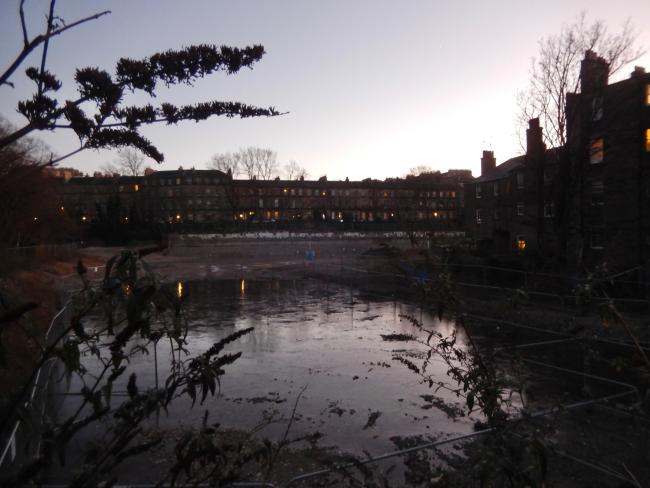
Proposal would transform and improve a 6-acre hole in the ground.
Cllr Key asked if there would be no holiday lets. Fusion confirmed.
Cllr Mowat asked for evidence of HMOs pushing up rental values. Fusion said its prices reflected a wider offer (managed facilities and welfare) and good value for money compared to HMOs. Average rents will be competitive when set in 2029 on completion of a consented proposal.
Cllr Pogson expressed disappointment at fewer housing units than before and mid-market rather than social rents. Fusion said that more social rents would be provided than required.
Cllr Parker asked if amenity and open spaces were fully accessible. Landscape architect said yes they were all accessible from street to front door.
Cllr McNeese-Mechan said universities were concerned about affordability of student housing. Fusion said its costs would offer a mix of price points. A 'full wrap of services' including a gym and panel court. We pitch ourselves in the mid-range of PBSA.
Cllr Staniforth understood office space was not as viable as before, but why had residences been lost to PBSA uses? Fusion said offices had been replaced by homes not PBSA. Build-to-rent had been replaced by PBSA. Loss of the build-to-rent investor has changed overall viability of the scheme. PBSA brings money into the scheme allowing homes to be built. 'Ultimately, it's about delivery.' The number of students proposed is a function of the building's footprint and design.
Cllr Jones asked if 70% increase in building costs explained PBSA. Fusion said no. Inflation delayed construction. Withdrawal of build-to-rent investor prompted the switch to PBSA.
Cllr Osler asked about amenity for students (daylight). How many affected units were single aspect? CBRE's architect said all units had 1 window each with access to other windows in kitchens, shared areas and roof spaces.
Cllr McNeese-Mechan asked about long-term sustainability and potential conversion of PBSAs into housing at a future date. CBRE architect said they could easily convert PBSA into 1–3-bedroom flats.
Cllr Parker asked about accessible PBSA flats and whether they were disproportionately affected by poor daylighting. Architect replied that 5% of flats are accessible and liveable, some with option of space for a carer. Accessible flats could be sited anywhere in the development.
Cllr Pogson asked for views on the future market for PBSA. Fusion said Edinburgh was a successful destination for students. There was a continued demand for PBSA.
Cllr Osler asked how homes and PBSA would integrate. Edison said design teams had worked hand in glove to ensure cohesion and coordination in spaces between different elements of the scheme.
Cllr Mowat asked for a breakdown of green space and hard standing in outdoor areas. Unknown said usable green space (including accessible privately and publicly accessible terraces) accounts for at least 30% of the area. (This figure did not include private terraces and areas.) Public realm of 1,500 sq.m.
Councillors' questions to officers
Cllr Parker asked about contributions to buses. SPO said there was no requirement for them.
Cllr Key said previous consent was made under a different Local Development Plan. SPO agreed but latest application has been considered according to new City Development Plan.
Cllr Lang asked at what level student numbers are too great. SPO said there are no hard-and-fast rules. Judge each application on its merits.
Cllr Staniforth asked on what grounds fewer homes than required breached City Plan. SPO: HOU 1 and ENV 26.
Cllr Parker questioned the number of trees. SPO said some visualisations might not show all trees, but the tree survey was accurate.
Cllr Key asked if Council could condition no short-term-lets or holiday uses. Officer said no.
Cllr Lang asked if application meets overshadowing restrictions. SPO said yes. Changes insignificant.
Cllr Mowat asked if whole application had been assessed according to latest City Development Plan. SPO said yes.
Councillors' discussion
Cllr Mowat understood reasons for changes in the proposal, but was concerned that the scheme might not match the current character of the surrounding area: particularly housing density. Can't decide in favour or against without more information on housing density of surrounding area. We should delay a decision until this is clear.
Cllr Staniforth leant to refuse consent because 10% shortfall in housing allocation (according to Council plan) is too significant to ignore. Potential legal ramifications if approve on grounds of HOU 1 and ENV 26.
Cllr McNeese-Mechan said this was a difficult decision. Concerned about gaping hole at time of housing crisis. Granting consent would at least start building homes.
Cllr Lang agreed that case was difficult to judge. Agreed with Cllr Staniforth's point but wondered if this provided proper grounds to reject. He agreed with Cllr Mowat on difficulty of assessing housing density without detailed information. How could they get that information?
[Council officers made rapid calculations on back of an envelope. After brief delay, on basis of neighbouring 2011 Census data sets, they produced figures suggesting development would double the population density. [LATE EDIT (17:22): This calculation proved persuasive. Spurtle found it hasty and unreliable, certainly difficult to evaluate accurately in the moment. We suspect it may be open to challenge and alternative interpretations.]]
Cllr Pogson was uncomfortable about too few housing units but understood market context that caused this. Proposal was imperfect but workable. He therefore supported the application.
Cllr Key understood animosity against PBSA. But cannot see grounds to refuse.
Cllr Parker was conflicted about the application. Concerned about HOU 5A (too far from educational institutions), HOU 5B (insufficient amenity for large increase in numbers, overshadowing, open spaces), HOU 5D (established character of the area). Breach of HOU 1 (too few residential units). Therefore would refuse.
Cllr Osler stressed proximity to the World Heritage Site. Disappointed with this application. Too many units fall on amenity. Concerned about population density. Agreed with Cllr Staniforth about need to insist on housing levels being met. With a heavy heart, could not support the application.
The vote
Cllr Key moved to approve, seconded by Cllr McNeese-Mechan.
Cllr Osler moved to refuse on the grounds that the application contravened policy guidelines HOU 1 (housing development), HOU 5B (conversion to housing), ENV 26 (housing density), ENV 33 (amenity). She was seconded by Cllr Mowat.
Cllrs refused planning consent by 7 votes to 4.
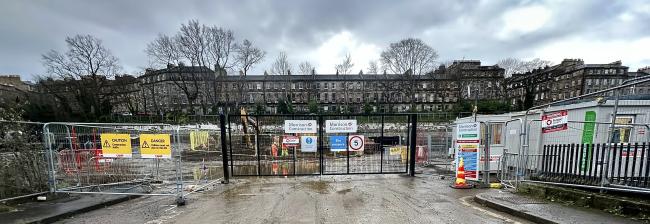
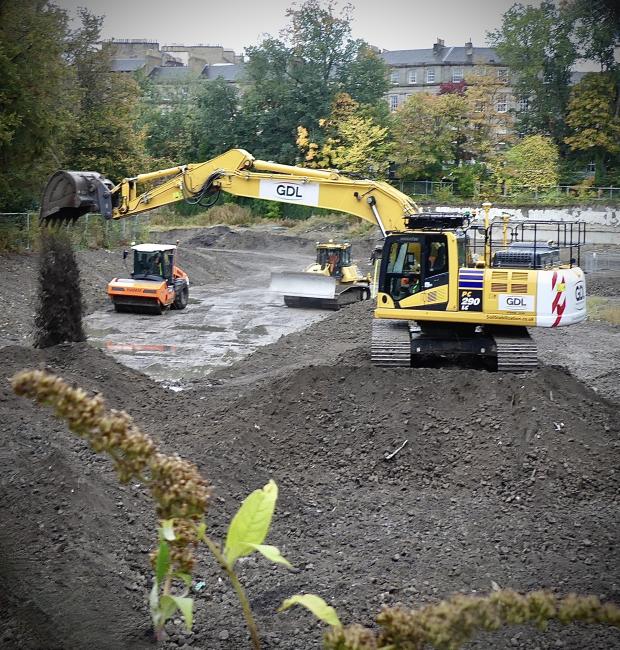
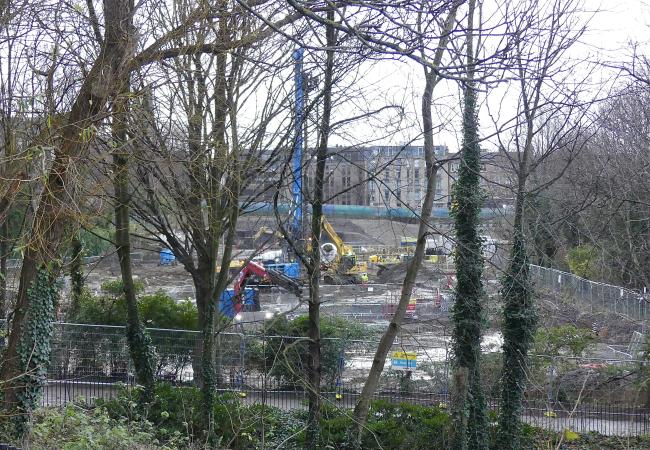
[Image of the former Loch Eyre: David Young.]
A webcast of the meeting will be available shortly here.
UPDATE (17:22): Following Spurtle's report, compiled at high speed earlier today, the Editor has made various minor stylistic corrections. Also, a substantive addition regarding validity of calculations about population density [see square brackets above].
Got a view? Tell us at spurtle@hotmail.co.uk.
---------------